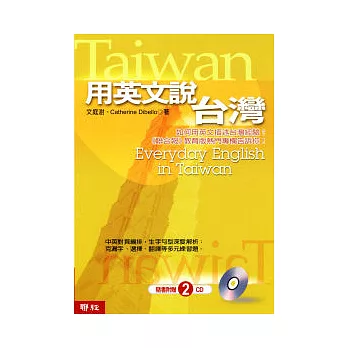
‘You live in the past and you don’t see how fast things are changing!’ Philip shouts at his father. Philip loves computers and basketball. Sometimes he thinks that no one else understands how important these things are. When Philip, his family and his team travel to a basketball match one Saturday, something happens which changes his life. Packed with audio CD.
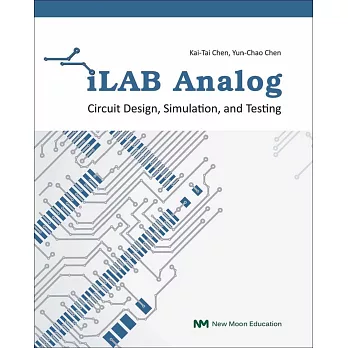
This booklet is designed for students as a supplement to the often insufficient contact hours allocated in the classroom or laboratory session to devote more attention to reinforcing basic, fundamental skills in understanding analog circuit design, testing, debugging and related skills to a level sufficient such that the student may become a competitive candidate during the job interview.
?
ILAB-Analog is composed of 12 chapters. Each chapter includes a brief introduction and relevant equations. LTspice simulation follows and is capped by implementation. Students in this course will be involved and through this involvement, understand the simulation and corresponding hardware implementation, the differences between the two including the extent of the difference. Examples within each chapter including highlights, reference materials, and the latest revision, etc., are posted on the web or cloud to facilitate downloading.
Designers of high-speed integrated circuits face a bewildering array of choices and too often spend frustrating days tweaking gates to meet speed targets. Logical Effort: Designing Fast CMOS Circuits makes high speed design easier and more methodical, providing a simple and broadly applicable method for estimating the delay resulting from factors such as topology, capacitance, and gate sizes.
The brainchild of circuit and computer graphics pioneers Ivan Sutherland and Bob Sproull, ‘logical effort’ will change the way you approach design challenges. This book begins by equipping you with a sound understanding of the method’s essential procedures and concepts-so you can start using it immediately. Later chapters explore the theory and finer points of the method and detail its specialized applications.
* Explains the method and how to apply it in two practically focused chapters.
* Improves circuit design intuition by teaching simple ways to discern the consequences of topology and gate size decisions.
* Offers easy ways to choose the fastest circuit from among an array of potential circuit designs.
* Reduces the time spent on tweaking and simulations-so you can rapidly settle on a good design.
* Offers in-depth coverage of specialized areas of application for logical effort: skewed or unbalanced gates, other circuit families (including pseudo-NMOS and domino), wide structures such as decoders, and irregularly forking circuits.
* Presents a complete derivation of the method-so you see how and why it works.